

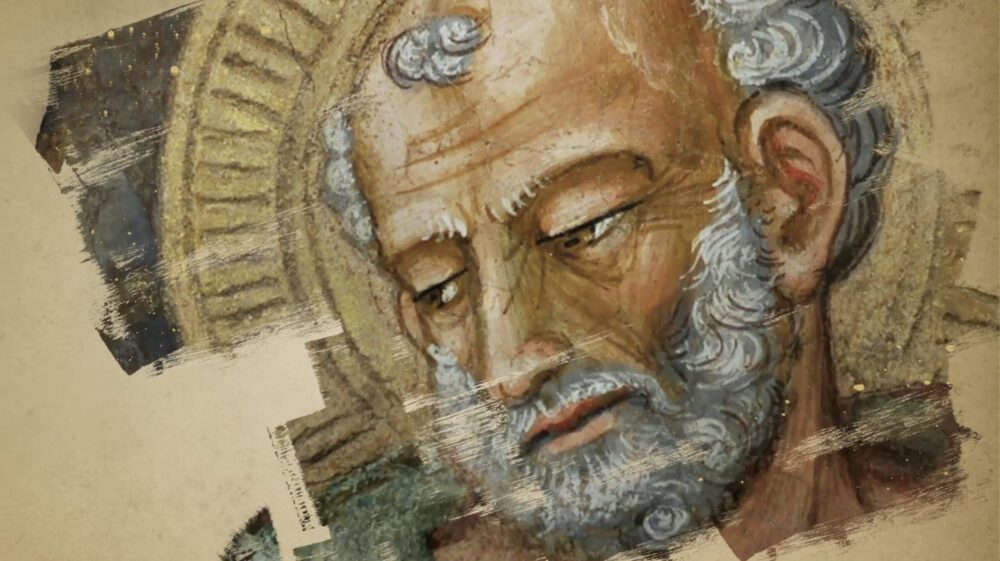
Interestingly, from all the information I gathered for the last podcast about James the Less, I hadn’t come across anything that identified James as the brother of Jude. I did discover some controversy regarding their family ties. In the Gospel of Luke, Jude is identified as the brother of James, but in the Book of Acts Luke identifies Jude as the son of James. I guess Jude himself settled this matter by identifying himself as the brother of James in the epistle he is credited as being the author.
So, without controversy we can safely say James and Jude were related by blood, but Jude was closely associated with Simon the Zealot, because like Simon, Jude was also a member of the Zealot Movement.
The Zealot Movement emerged and was known as a “Fourth Philosophy,” which flourished during the 1st century. This anti-Roman resistance group was intermingled among the various “zeal” groups, such as the Sicarii. These groups were inspired by the historical Maccabees, who led a successful revolt against tyranny to preserve Jewish religion and culture, which brought about a century of independence to Judea. Their famous victory is commemorated yearly during the holiday of Hanukkah, the Festival of Lights.
The term “zealot” became synonymous with fanaticism and extremist opposition to oppression, since the focus of many of the groups was specifically on violent revolt. They believed paying taxes to Caesar was a betrayal of God. Groups like the Sicarii, also known as Daggermen, because they carried hidden weapons to assassinate Roman officials and Jewish collaborators in crowded public spaces. However, these “zeal” groups such as “Fourth Philosophy” are also remembered for their intense devotion to their faith and national freedom.
These groups were active during the time of Jesus as Jude’s and Simon’s involvement indicates. Mark 24:1 tells us as Jesus left the temple and was walking away His disciples came up to Him to call His attention to its buildings. He asked them, “Do you see all these? I tell you the truth, not one stone here will be left on another; everyone will be thrown down.”
The religious leaders, the Pharisees and Sadducees, often sought accommodation or religious freedom within the Roman system. It was the Zealots who insisted on an immediate, armed uprising to secure liberty. The Zealots played a key role in the rebellion that led to the Roman siege of Jerusalem, the destruction of the Second Temple and was a significant turning point in Jewish history. After the fall of Jerusalem, a remnant of Zealots held out at the mountaintop fortress of Masada before committing mass suicide rather than submitting to Roman slavery.
Sadly, 960 Jewish rebels, women and children committed suicide to avoid being captured. The siege and death of all those people occurred in the spring of 73 AD, which is marked in history as the First Jewish-Roman War. Why was Judas Thaddaeus not among those who died during this war with the Romans? Jesus! Jude became a witness to everything the Lord did in the country of the Jews, in Jerusalem, yes, throughout Judea, beginning in Galilee after the baptism John preached.
Yes, Jude grew in faith and trust and confidence in God, because he witnessed how Jesus went around doing good and healing all who were under the power of the devil, because God anointed the Lord with Holy Spirit and with power (Acts 10:34). Jude the zealot absolutely entered into warfare. Christian warfare, holding fast to his faith in Christ. Faith that requires the leaning of the entire human personality on God in absolute trust and confidence – so to have a good clear conscience. By rejecting and thrusting from himself, some individuals who may have shipwrecked his faith (1 Timothy 1:19 AMP), as every zealous disciple of Jesus should do.
Wasn’t it Jesus Who said, “From the days of John the Baptist until now the Kingdom of Heaven suffers violence, and the violent take it by force,” Matthew11:12 NKJV. At one time, Jude’s legacy could have been the same as those nameless extremists who made their last stand on that mountaintop fortress. There is no denying Jude was a forceful man who not only suffered the violence evil perpetrates on mankind, he violently fought for freedom from Roman oppression. I’m not saying blood was shed by his hand, no one knows that, but he supported the use of violence. That is, until the goodness of God walked into his life.
Talk about recovery of sight, the renewal of a mind when the Truth is pursued in earnest. This AI overview explains “…the Kingdom of Heaven suffers violence, and the violent take it by force,” refers to the intense, passionate response to the loving-kindness of Jesus and to His message of peace, of forgiveness, of grace.
This Scripture speaks to a “Holy Earnestness,” where people are meant to act with desperate, urgent eagerness to embrace the Kingdom, rather than passive faith that may not be strong enough to stand up to and endure persecution that arises, whenever the Truth, Christ Jesus, is offered. Persecution that arises for following the most excellent Way that flows with Life filling anyone who asks, who seeks, who knocks on the Door of heaven, for our enemy knows we will be received by Jesus (Matthew 10:8), Who freely bestows salvation.
Father, consider our threats
And enable Your servants to speak Your Word
With great boldness.
Stretch out Your hand, Father, to heal
And perform miraculous signs and wonders
Through the name of Your holy and precious
Servant Jesus
Acts 4:29